How the UK’s First Rapid‑Charging Battery Train Signals a New Phase for Green Transport
The UK’s green transport transition has a new and practical milestone. In late January 2026, Great Western Railway launched the country’s first rapid‑charging battery train into passenger service on the West Ealing to Greenford branch in west London. This converted Class 230 train recharges in a matter of minutes and is proving that battery power can replace diesel on short regional routes where traditional electrification is expensive or slow to roll out. The Guardian covered the launch, highlighting its potential role in cutting emissions and helping operators rethink infrastructure choices.
This isn’t just a prototype. After successful trials that saw it break the world record for longest battery train distance on a single charge — more than 200 miles — the train now carries real passengers. Running initially on a limited Sunday schedule, the service provides invaluable data about real‑world operations and what a cleaner railway actually looks like in practice.
What Makes This Important?
Rail is already one of the most climate‑friendly mass transport modes in the UK, but diesel rolling stock still dominates many branch lines. Traditional electrification requires significant civil works and high upfront cost. The battery model flips part of that equation. By using targeted rapid charging infrastructure at key stations, operators can cut diesel dependency without waiting for full wire networks.
For transport planners and investors alike, this shifts how we think about decarbonising networks. Instead of modelling around decades‑long electrification timelines, it becomes realistic to consider staged approaches that combine rolling battery systems and smaller, focused power points.
From a finance perspective, that’s valuable. When you’re appraising an asset like a regional train fleet, the timeline to return on investment changes when you can retire diesel engines sooner, reduce maintenance, and cut fuel costs without waiting for external infrastructure projects to complete.
Operational and Policy Implications
Introducing battery trains brings practical considerations for operators and policymakers. Depot and station planning must integrate high‑power charging infrastructure. Timetable and turnaround strategies need to account for charging windows. Power supply plans must link with grid operators in ways that don’t simply replicate the demands of a fully electrified line, but embed intelligent load management at key nodes.
Policymakers also have a role. Without clear regulatory pathways and capital allocation frameworks, innovative technologies can stall between trials and wider roll‑out. A successful battery train needs to be matched with policy signals that encourage deployment on other suitable routes and support operators in securing funding. This is especially relevant as the UK aims to phase out diesel‑only trains by 2040 as part of broader net‑zero goals.
Beyond Trains: A Broader Sign of Momentum
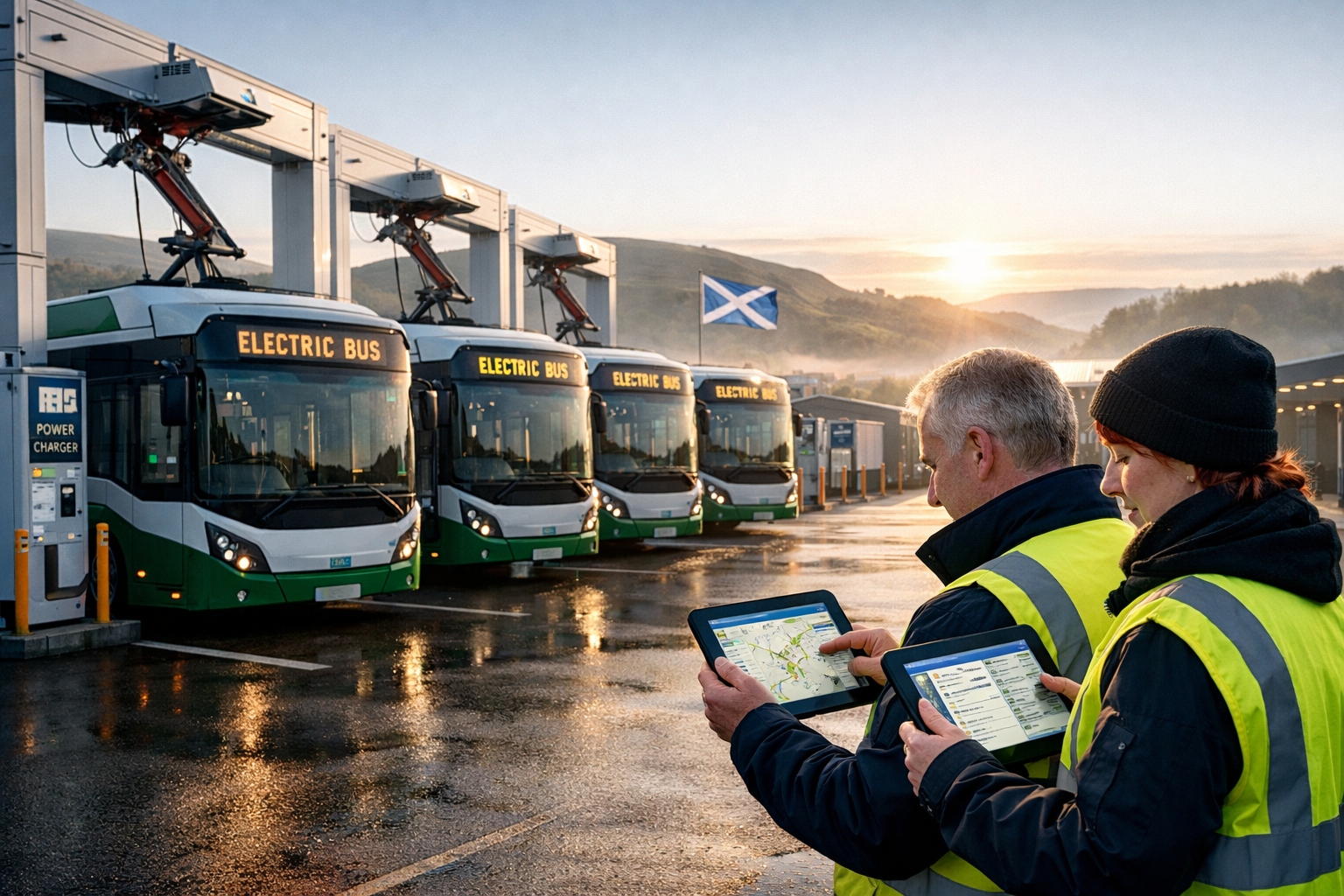
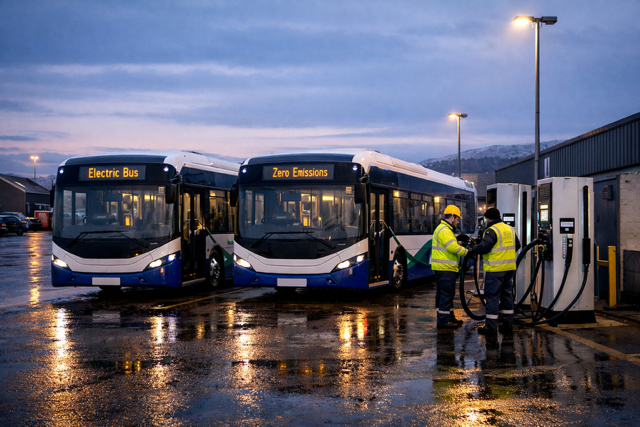
While this battery train headlines the moment, it sits within a broader context of changes in UK mobility. Scotland is trialling capped bus fares to boost public transport uptake, and debates continue around electrifying municipal fleets that lag behind road‑vehicle electrification. All this mirrors the bigger picture in UK transport: cleaner technologies are advancing, but infrastructure, policy and public behaviour must evolve alongside.
That broader context is essential. The battery train shows technical feasibility. Affordable and accessible transport options like cheaper bus travel schemes aim to shift mode share. Yet gaps — such as diesel fleets still operating in key urban roles — remind us that technology advancement doesn’t automatically translate to rapid adoption.
What This Means for the Next Phase
For brokers and asset planners, the key takeaway is this: green transport isn’t a future event. It’s unfolding now in ways that change risk, cost and asset life assumptions. A battery train in passenger service alters depreciation models, opens new project categories, and challenges how infrastructure is valued in decision‑making.
This isn’t about replacing one power source with another in theory. It’s about seeing how sustainable transport actually performs when serving people, not just ticking climate metrics. As other lines trial similar technologies and policymakers refine frameworks to support them, the shape of UK transport will continue to adjust. These early examples provide tangible evidence for more informed planning, investment decisions and strategic transitions toward net zero.
You might also like