E-Moped Fleet Finance | Commercial Electric Moped Fleet Finance for UK Businesses | Avro Finance Skip to content
E-moped fleet finance specialists

Electric E-Moped Fleet Finance For UK Businesses & Urban Logistics Operators

E-moped fleet finance helps businesses spread the cost of electric mopeds and delivery-ready two-wheel assets through structured monthly payments rather than paying the full purchase price upfront. Avro specialises in commercial e-moped procurement for UK businesses, delivery networks, local authorities and urban logistics operators planning fleet deployment, rider programmes and larger-scale last-mile transport projects.

Commercial e-moped deployments Road-legal electric mopeds Delivery fleets and urban operators Mixed-fleet support

This page is designed for organisations assessing e-mopeds as commercial fleet assets rather than consumer purchases. Our latest research into UK last-mile delivery found that parcel demand, urban congestion, clean air policy and pressure on unit delivery economics are all pushing operators to think more carefully about route design, fleet mix and asset funding. If you are researching electric moped fleet finance, urban logistics procurement, last-mile delivery fleet funding or lower-emission two-wheel rollout support, the sections below explain where this model fits, what affects affordability and why more organisations are now treating e-mopeds as part of serious fleet planning.

E-Moped Fleet Finance Calculator

Adjust the sliders to estimate indicative monthly payments for a commercial fleet requirement.

5 mopeds
£4,000
48 months

Estimated Monthly Payment

£0.00
Fleet size 5
Average e-moped value £4,000
Total fleet value £20,000
Term 48 months
Business profile Strong
Total payable £0.00
Per moped / month £0.00
Apply or Enquire

This calculator is for illustration only. Actual finance terms depend on lender approval, business profile, asset type, asset age, supplier, structure and underwriting. The business profile selector is used to estimate the calculation and does not guarantee acceptance or a specific rate.

Cargo moped finance explained

What Is E-Moped Fleet Finance?

Cargo moped fleet finance allows a business or organisation to fund electric e-mopeds over an agreed term instead of paying the full purchase price in one go. In practice, it is most relevant where multiple assets are being deployed for delivery operations, facilities work, estate logistics, public-sector mobility programmes or broader commercial fleet expansion.

The aim is usually the same: preserve working capital, support operational rollout and put revenue-supporting or service-critical delivery assets into use without creating unnecessary upfront cash pressure. This is especially relevant in urban delivery environments where e-mopeds are increasingly being used for short-radius, high-drop-density work and fleet decarbonisation strategies.

Why the market is shifting

Why More UK Operators Are Looking At E-Mopeds

As highlighted in Avro Finance's data-led report, e-mopeds are increasingly part of a practical commercial response to parcel growth, urban congestion, kerbside pressure and last-mile efficiency.

1

Parcel demand remains high

Research carried out by Avro Finance indicates that UK parcel volumes rose to 4,214 million items in 2024–25. That matters commercially because more parcels do not automatically mean easier margins; they usually increase the importance of route density, failed-delivery reduction and lower-cost urban fulfilment.

2

Urban van pressure is rising

Our review of UK last-mile delivery trends shows van traffic in Great Britain reached 58.5 billion vehicle miles in 2024. For operators, rising mileage means more exposure to congestion, kerbside friction, dwell time and delivery schedules that are increasingly shaped by city conditions rather than headline road speed.

3

Cargo moped adoption is growing

As highlighted in Avro Finance's data-led report, central London cargo moped counts rose from 4,915 in 2022 to 6,998 in 2023, a 42% increase. That growth suggests e-mopeds are moving further into mainstream commercial fleet strategy where stop density, parking access and short urban legs favour lighter assets.

4

They support selective van substitution

Our analysis of fleet operators suggests the real question is not whether e-mopeds replace every van. TfL modelling showing up to 17% of van kilometres in central London could be displaced under the right conditions is important because it points to selective route substitution, mixed-fleet deployment and more targeted capital planning.

Research insight

Key Findings From Our Last-Mile Delivery Research

Our latest research into UK last-mile delivery found that the market is being reshaped by two pressures happening at the same time: sustained parcel demand and a more constrained urban operating environment. Parcel volumes rose to 4,214 million items in 2024–25, while van traffic in Great Britain reached 58.5 billion vehicle miles in 2024. Together, those trends matter because they increase the cost of inefficiency. More drops, more time spent at the kerb and more route friction can quickly erode margin when fleets are still trying to meet demanding service expectations.

The report also highlights why delivery strategy is becoming more location-specific. Clean Air Zones, congestion, limited loading space and city-centre access restrictions are changing how operators think about the final leg of fulfilment. In that environment, micro-hubs, urban consolidation points and mixed-fleet planning are becoming more commercially relevant because they shorten the van leg and allow lighter assets to handle the densest urban zones more efficiently.

Electric cargo moped adoption sits within that wider shift. Our analysis of UK fleet trends suggests businesses are not looking at e-mopeds as symbolic sustainability assets; they are looking at them as operational tools for short-radius, high stop-density work where vehicle utilisation is shaped by dwell time, kerbside access and repeat-drop productivity. For finance decision-makers, the commercial question is increasingly about where e-mopeds improve fleet economics, how they integrate with vans and other assets, and how investment can be structured around practical rollout rather than theory alone.

Who this page is for

E-Moped Fleet Finance For Commercial Procurement Teams

This asset class works best where organisations are planning structured procurement, multi-vehicle deployment and longer-term urban transport strategy rather than consumer-style one-off purchases.

A

Courier, parcel and takeaway networks

Relevant for operators expanding lower-emission last-mile capacity through city-centre fleet deployment, rider scheduling and route redesign.

B

Regional logistics, grocery and takeaway operators

Useful for commercial operators adding multi-vehicle two-wheel capacity across urban rounds, service zones and high-frequency multi-drop routes.

C

Institutions and estate operators

Suitable for local authorities, universities, NHS trusts, facilities groups, property portfolios and corporate campuses investing in larger lower-emission transport programmes.

What can be financed

Electric Cargo Bike Assets And Related Urban Delivery Equipment

Cargo moped finance is not limited to one standard moped type. Depending on the requirement, the asset conversation may include different cargo moped formats, load configurations and broader related equipment that supports commercial fleet use.

  • Two-wheel electric e-mopeds for urban delivery and service routes.
  • Trike and higher-capacity cargo moped formats for heavier or more stable load requirements.
  • Multi-moped fleet purchases for couriers, food delivery operators, councils, campuses and urban operators.
  • Mixed low-emission fleet discussions where e-mopeds sit alongside other last-mile assets.
  • Broader commercial transport or refinance discussions where e-mopeds form part of a larger procurement programme.
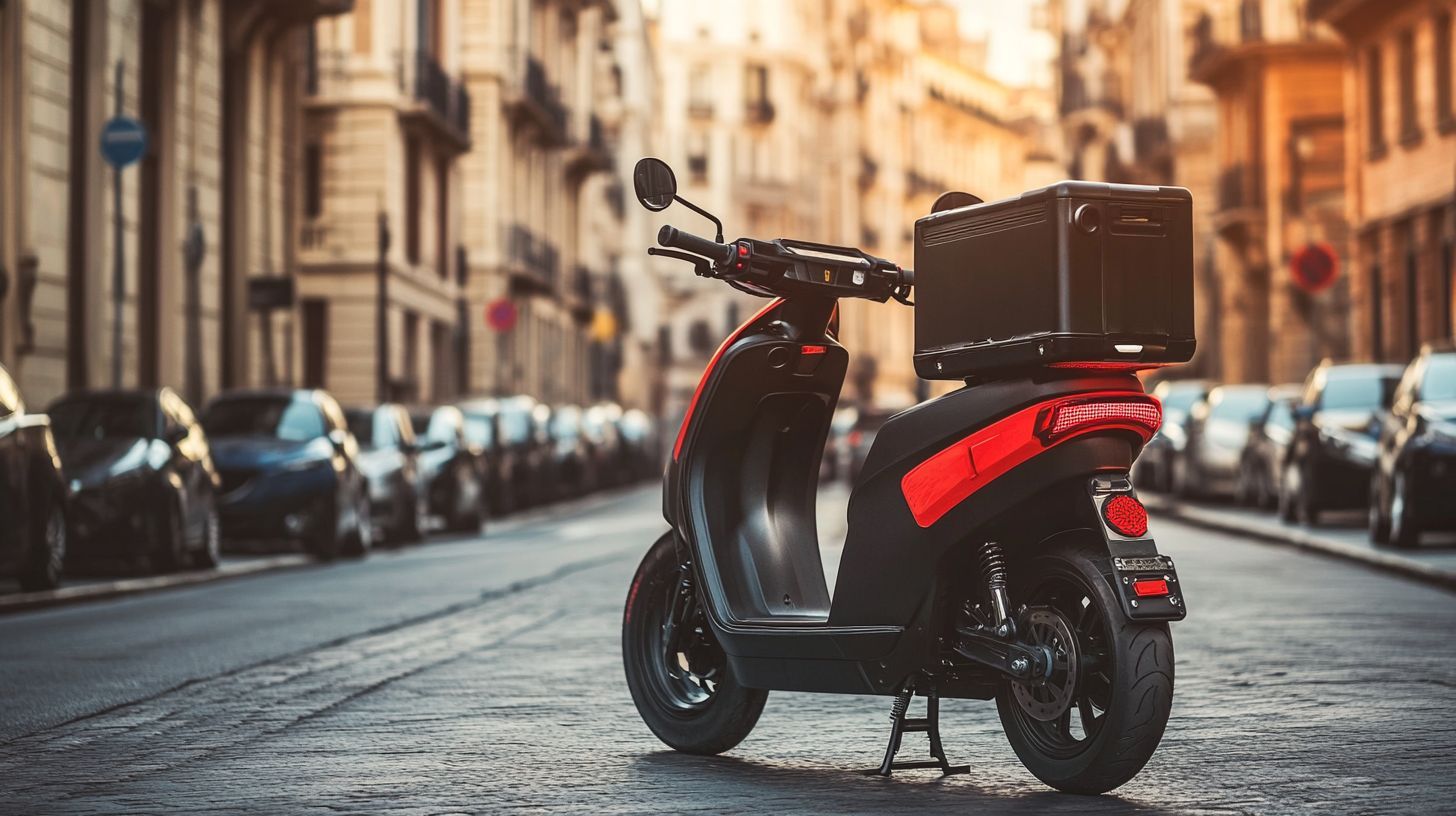
Electric cargo moped used for city delivery operations Urban two-wheel asset
Commercial vehicle fleet and last-mile logistics operations Mixed fleet planning
Why businesses finance

Why Finance E-Moped Fleets Instead Of Paying Upfront?

1

Preserve cashflow

Financing can reduce the need for a full upfront outlay and help a business keep more cash available for everyday operating costs.

2

Support staged growth

A business may want to phase a fleet deployment or expand an existing rider programme without funding the entire rollout from cash.

3

Match cost to commercial use

If the asset is being used to generate income, spreading the cost over time can make more commercial sense.

4

Help mixed-fleet transition

Some operators are building mixed fleets where e-mopeds take specific urban duties while other assets stay in place for heavier work.

Urban e-moped route and city delivery environment
Operational logic

Why E-Mopeds Can Make Sense In Last-Mile Delivery

The case for e-mopeds is not simply environmental. It is operational. In dense towns and cities, last-mile productivity often depends more on stop density, dwell time, parking access and route friction than on outright speed. Our review of UK last-mile delivery trends shows that once a route becomes heavily shaped by repeated stops rather than line-haul distance, vehicle choice starts to follow a different logic.

Research carried out by Avro Finance indicates that route optimisation in urban delivery is increasingly about matching the right asset to the right section of the network. Cargo mopeds can make sense where high stop-density rounds, constrained kerbside access and short-radius coverage mean a van spends too much time idling, circling for space or waiting at the drop. In those conditions, delivery productivity can improve because the asset is spending more time completing stops and less time absorbing urban delay.

That is why many businesses are changing. As highlighted in Avro Finance's data-led report, mixed-fleet deployment is becoming a more credible commercial model in which vans continue to handle heavier payloads, longer distances and wider route coverage, while e-mopeds support compact urban zones, micro-hubs and lower-emission fleet planning. The underlying shift is really about utilisation and fleet economics: using each vehicle type where it performs best rather than forcing one asset class to do every job.

Cost context

Typical E-Moped Fleet Values And What Affects Finance

Fleet investment context

While an individual cargo moped may cost between £5,000 and £16,000 depending on specification, many commercial projects involve multiple assets. Fleet investments of £25,000 to £500,000+ are increasingly common for organisations expanding their last-mile delivery capability or introducing low-emission transport strategies.

Monthly payment factors

Indicative monthly costs are usually influenced by fleet size, average asset value, finance term, business profile, supplier structure and the wider commercial profile of the procurement project.

Why a tailored quote still matters

A calculator is useful for planning, but a real quote still depends on the supplier, the organisation, the assets, the term, the structure and lender criteria.

Common use cases

How Businesses Use E-Mopeds In Practice

Courier, parcel and takeaway networks

Short-radius, high-drop-density delivery work in urban areas where e-mopeds can support city-centre route redesign and micro-hub strategy.

Grocery and retail fleet programmes

Useful for store-led fulfilment, urban delivery estates and regional lower-emission rollout across multiple trading locations.

Food delivery and on-demand services

Suitable for food delivery platforms, restaurant groups and on-demand service operators where route speed, repeat trips and easy parking matter commercially.

Campus, estate and public-sector mobility

Relevant for public-sector and institutional procurement where lower-emission asset deployment supports estate transport, security patrols or service operations.

Property groups and corporate campuses

Useful where large managed estates need internal movement, security support and cleaner mobility across dense sites.

Distribution and urban logistics businesses

Used alongside vans where organisations want to remove some city-centre van mileage without compromising broader delivery coverage or dispatch responsiveness.

Why businesses speak to Avro

A Practical Approach To E-Moped And Last-Mile Asset Finance

Cargo moped fleet finance should be discussed as a commercial procurement conversation, not as a consumer or lifestyle purchase. The right structure depends on how the mopeds will be used, what the wider operation looks like and whether the requirement forms part of a local rollout, multi-site programme or wider commercial fleet plan.

  • Commercial fleet procurement and multi-vehicle deployment discussions.
  • Practical support for business-use applications.
  • Relevant to urban logistics, courier and operational delivery use.
  • Comfortable within wider mixed-fleet and transport asset conversations.
Business logistics planning and e-moped fleet procurement discussion
How cargo moped finance works

A Straightforward Route From Enquiry To Payout

The process follows the same practical structure used across the newer Avro pages, adapted for e-mopeds and urban last-mile assets.

1

Tell us about the fleet requirement

Share how many e-mopeds are required, the supplier if known and whether the requirement sits within a broader fleet expansion, estate transport strategy or urban delivery programme.

2

We review the structure

The discussion usually covers asset type, business profile, route model, term and the most realistic way to shape the requirement.

3

Lender review

The case is packaged around the business use, the assets and the overall commercial profile of the deal.

4

Complete and deploy

If approved, documentation and payout can move forward so the mopeds can be ordered and put into use quickly.

Electric E-Moped Fleet Finance In The UK

Electric cargo moped finance in the UK is becoming more relevant as businesses rethink how goods move through urban areas. For many operators, the question is no longer whether a cargo moped is interesting, but whether it can improve route efficiency, reduce city-centre friction and support a lower-emission last-mile model in a commercially sensible way.

This can apply to more than just major parcel fleets. Delivery networks, logistics firms, retailers, facilities operators, public-sector organisations and larger institutions can all have use cases where electric e-mopeds support a clearer operating model. In the right setting, they can sit alongside vans, micro-hubs and other last-mile assets rather than replace them outright.

If you are searching for cargo moped finance, electric cargo moped finance, e-cargo moped funding, last-mile delivery moped finance, urban logistics fleet finance or cargo moped fleet funding, this page is designed to make the commercial case easier to understand and compare.

E-Mopeds, Clean Air Zones And Mixed-Fleet Planning

One reason e-mopeds are becoming more commercially relevant is that they sit at the intersection of fleet economics, urban policy and public-sector transport strategy. Growing van traffic, pressure on kerbside space, Clean Air Zone considerations and the wider push toward lower-emission fleet models are all part of that picture.

For many businesses, the practical answer is not a full van replacement strategy. It is a mixed-fleet model in which e-mopeds handle the right short-radius tasks while vans and other assets remain in place for heavier loads, longer distances or more complex rounds.

Future operations

What Our Research Suggests About The Future Of Urban Fleet Operations

Our analysis of fleet operators suggests mixed fleets are becoming the preferred model for urban delivery rather than a temporary halfway stage. The reason is practical: vans, e-mopeds and other low-emission assets solve different operational problems. Vans still matter for heavier payloads, longer legs and wider geographic coverage, while e-mopeds can improve productivity in dense urban areas where stop frequency, access limits and dwell time influence route economics more than vehicle speed.

The report also points toward a broader restructuring of urban logistics. Micro-hubs, urban consolidation centres and shorter final delivery legs are becoming more important because they allow fleets to use different vehicles more intelligently across the same network. At the same time, increasing electrification, Clean Air Zone pressure and lower-emission procurement standards are making fleet planning less about a single vehicle replacement cycle and more about a joined-up operating model.

For many organisations, that links directly to corporate sustainability strategy, ESG reporting and future investment planning. Research carried out by Avro Finance indicates that e-mopeds are unlikely to replace vans outright, but they are becoming more relevant wherever businesses need commercially credible ways to reduce urban emissions, improve route efficiency and show measurable progress against wider transport and decarbonisation goals.

Further reading

Continue Reading

Last Mile Delivery in the UK – A Data-Led Guide for Fleet Operators and Finance Decision Makers explores the wider context behind the commercial decisions discussed on this page. It looks at parcel demand, van traffic, fleet economics, cargo moped adoption, urban logistics constraints and the policy changes shaping lower-emission delivery models.

Rather than treating e-mopeds in isolation, the report examines how mixed fleets are developing in practice and why route design, kerbside access, micro-hubs, congestion and commercial transport trends now play a bigger role in investment decisions. That makes it useful reading for logistics operators, procurement teams, public-sector organisations and businesses assessing long-term urban fleet planning.

Read the full last-mile delivery research report for a more detailed view of the market forces influencing cargo moped fleet strategy.

Cargo moped finance FAQs

Common cargo moped finance questions

These short answers are written to make the page easier to scan for both users and search systems.

What is cargo moped finance?

Cargo moped fleet finance is a way for a business or organisation to spread the cost of buying multiple electric e-mopeds over an agreed term instead of paying the full amount upfront.

What size requirements does Avro typically support?

Avro specialises in business cargo moped finance with typical finance requirements starting from £25,000, which generally makes the page most relevant for multi-bike purchases, fleet expansion and larger commercial transport projects.

Who is this page designed for?

The page is designed for UK businesses, delivery networks, logistics operators and organisations such as local authorities, universities, NHS trusts and facilities groups planning commercial cargo moped deployment.

How much does an electric cargo moped usually cost?

Typical discussions often place cargo moped pricing around £5,000 to £16,000 depending on configuration, although actual pricing varies by model and setup.

What affects monthly payments?

Indicative monthly costs are usually shaped by the number of mopeds, average asset value, term, business profile and the overall structure of the requirement.

Are e-mopeds only useful for couriers?

No. They can also be relevant for food delivery, grocery fulfilment, estate mobility, security support, service rounds and other urban business activities where rapid short-range transport matters.

Are e-mopeds replacing vans completely?

Not usually. In many cases they work best as part of a mixed fleet, taking on certain urban routes while vans remain in place for heavier payloads, broader coverage or more complex rounds.

Can I get finance for multiple e-mopeds at once?

Yes. The strongest fit is usually where a business or organisation is funding multi-vehicle purchases, commercial rollouts or structured fleet expansion.

Ready to discuss e-mopeds?

Speak To Avro About E-Moped Fleet Finance

Whether you are planning a rider-based delivery rollout, a public-sector mobility programme or a broader urban fleet expansion, Avro can help shape a more tailored finance conversation around the assets, the route model and the way your organisation actually operates.