1
NHS & contract-led providers
NHS contractors, subcontracted PTS operators and contract-mobilisation fleets.

Avro supports NHS contractors, private ambulance services, patient transport providers, charities, event medical operators and specialist emergency response organisations with finance for ambulances, rapid response vehicles, converted fleets and low-emission replacement programmes. This is manually underwritten commercial funding shaped by the vehicle, the conversion, the operator and the mission, not a standard retail motor finance product.
Ambulance and emergency vehicle finance sits apart from ordinary commercial vehicle funding because the asset is rarely just a vehicle. A frontline ambulance is a base chassis, a blue light conversion, a patient compartment, medical equipment, communications systems and a compliance history all combined into one asset supporting a service that cannot afford downtime. A single rapid response car, a phased fleet replacement programme, a refinance of existing vehicles to release working capital, or the mobilisation of a new NHS or private contract can each raise very different underwriting questions, which is why this category benefits from a specialist, manually assessed approach rather than a generic retail lending model.
Coverage extends well beyond the frontline ambulance to the full range of assets used across modern emergency and medical fleets.
Double-crewed A&E ambulances built to national specification.
PTS vehicles for planned, non-emergency patient journeys.
HDU conversions for higher acuity inter-facility transfers.
Single-crew cars carrying advanced clinical kit to scene quickly.
Vehicles equipped for immediate-care doctors and critical care teams.
Vehicles used by community first responder and voluntary schemes.
Vehicles supporting crew welfare at incidents and long operations.
Larger vehicles coordinating multi-agency medical response.
Vehicles equipped for major incident and mass casualty response.
Larger converted units providing on-site clinical treatment space.
Vehicles deployed to festivals, sporting fixtures and public events.
Vehicles specified for higher-risk operational environments.
Temperature-controlled vehicles for time-critical blood and sample transport.
Specialist conversions carrying neonatal transport incubators.
Reinforced conversions with bariatric-rated lifting and stretcher systems.
4x4 platforms for rural, off-road and difficult-access response.
Battery-electric conversions for suitable duty cycles and depots.
Hybrid platforms bridging conventional and full-electric operation.
Motorcycle-based responders for congested or event environments.
Larger converted vehicles delivering outreach clinical services.
Towed units supporting event medical and mobile clinic deployments.
Emergency and medical fleet finance is used by a wide spread of organisations, and treating them all as one generic client type misses the point. An NHS-contracted patient transport provider replacing part of a large fleet ahead of a contract renewal has a very different profile from a charity funding a single community responder vehicle, or an event medical company scaling up ahead of a busy festival season. That range is exactly why a manual, case-by-case underwriting approach matters more here than in most other commercial vehicle categories.
Organisations we support include NHS contractors and subcontracted providers, independent and private ambulance services, patient transport providers, event medical providers, community responder organisations, emergency response contractors, airside medical providers, industrial emergency response companies, offshore medical providers, film and TV medical support companies, universities, charities, local authorities, specialist healthcare operators, first aid providers and occupational health fleets. We also support start-up operators establishing their first vehicle, growing operators scaling a fleet, and established operators running structured fleet replacement programmes.
NHS contractors, subcontracted PTS operators and contract-mobilisation fleets.
Private ambulance services, patient transport and independent responders.
Event medical providers, community responder groups and charities.
Universities, local authorities, industrial, offshore and film & TV medical support.
Adjust the figures below to estimate indicative monthly payments for an ambulance, response vehicle or fleet purchase.
Estimated Monthly Payment
This calculator is for illustration only. Actual finance terms depend on lender approval, borrower profile, deposit, vehicle type, age, conversion, structure, underwriting and lender criteria. The business profile selector is used only to estimate the illustration and does not guarantee acceptance or a specific rate.
Most ambulances and emergency response vehicles start life as a standard commercial chassis before undergoing a specialist conversion.
Sprinter is one of the most widely used ambulance conversion platforms in the UK.
Transit and Transit Custom feature widely in PTS and rapid response fleets.
Crafter and Transporter platforms used across PTS and response conversions.
Ducato is a long-standing base vehicle for ambulance conversions.
Master and Trafic used in PTS, WAV and response vehicle builds.
Estate and SUV models frequently used for rapid response cars.
4x4 platforms specified for rural and difficult-access response.
Daily platform used in larger PTS and specialist conversions.
TGE used in larger-capacity PTS and high dependency conversions.
Estate and SUV models used historically and in current response fleets.
Used as a base for larger command and incident response vehicles.
Beyond the base chassis, conversion quality is central to how a lender views the asset. A handful of established UK specialist converters build the majority of the country's frontline and patient transport fleets, including WAS(Wietmarscher Ambulanz und Sonderfahrzeug, operating in the UK as WAS UK), Wilker(Wilker Group / Wilker UK), O&H Vehicle Conversions, and Babcock Vehicle Engineering, which converts ambulances, patient transport vehicles and other emergency assets alongside its wider vehicle engineering work. These are not the only UK converters, and the market includes other regional and specialist builders, but working with a recognised converter, and being able to evidence the conversion history and compliance documentation, can materially support a stronger lending case.
Conversion standard matters because a poorly documented or non-standard conversion can be harder to value, harder to resell and harder to lend against, regardless of how sound the base chassis is. Where a vehicle has been converted to a recognised standard, with full documentation, type approval evidence and a traceable service history, lenders are generally better placed to assess the asset on its merits.
Suitability depends on the vehicle, the conversion and the operator, not simply whether the asset is new or used.
Longer forward service life and a clear compliance and warranty position from day one.
Can control capital outlay where age, mileage and conversion condition are suitable.
May sit between new and older used stock, with sensible valuation still required.
Considered case by case based on conversion standard and remaining service life.
A new ambulance from a recognised converter and an older used response vehicle bought through the specialist secondhand market are genuinely different propositions, and pretending otherwise does operators a disservice. New vehicles typically offer the cleanest compliance position, the longest forward service life and the most straightforward underwriting. Used vehicles can be a sensible route for operators managing budget carefully, but age, mileage, conversion condition, documented service history and remaining life on the patient compartment and equipment all carry real weight in the assessment.
Fleet replacement is its own category again. Where an operator is cycling out older vehicles for newly converted replacements, whether one at a time or in a phased programme, the funding conversation typically needs to account for delivery lead times from the converter, decommissioning of the outgoing vehicles, and how the transition affects day-to-day service continuity.
Fleet planning in this sector is unusually high-stakes. Downtime on a frontline ambulance is not simply an inconvenience, it can mean a vehicle that should be responding to patients is off the road, which has direct operational and reputational consequences for the operator and, where relevant, for the commissioning NHS trust or contracting authority. That reality shapes how fleet finance needs to be structured.
A well-planned fleet strategy typically covers planned replacement cycles rather than reactive one-off purchases, phased procurement so vehicles are not all due for replacement in the same period, cashflow planning that spreads capital outlay rather than concentrating it, and a clear view of expected maintenance burden and downtime risk as vehicles age. For multi-site operators, standardising conversions and equipment across the fleet can also simplify training, maintenance and parts holding, which is a factor worth building into the funding conversation from the outset.
Contract mobilisation is a distinct scenario within fleet planning. Winning a new NHS or private contract often means needing a defined number of compliant, converted vehicles ready by a fixed date, which puts pressure on both procurement lead times and funding timelines. Structuring finance around that mobilisation date, rather than treating it as a standard purchase, is often what separates a smooth contract start from a difficult one. Fleet transactions may sit alongside wider Fleet Finance planning where an operator is managing vehicles across more than one service line.
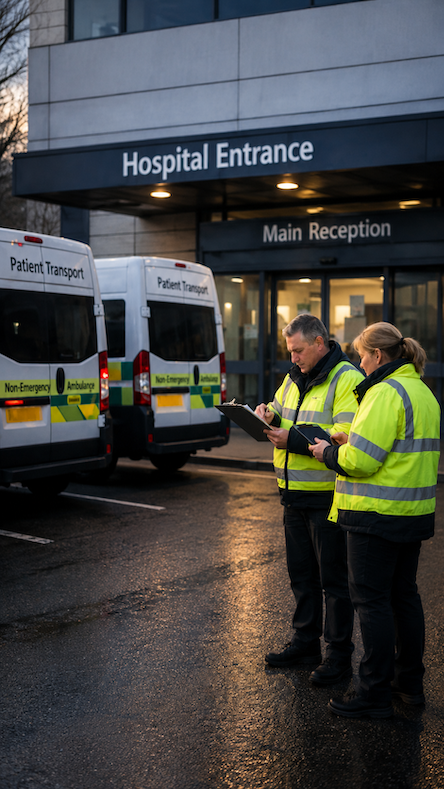
Many operators already hold meaningful value in an existing fleet of owned or part-owned ambulances and response vehicles, and refinance can be a practical way to put that value to work rather than leaving it tied up in the asset. Refinance may suit an operator wanting to release working capital, restructure existing borrowing onto more suitable terms, or free up cashflow ahead of a busy operational period.
Equity release follows a similar logic but is typically used more deliberately to fund a specific next step, such as expanding the fleet, mobilising a newly won contract, or supporting the acquisition of another operator or book of business. The amount available depends on the valuation of the existing vehicles, any outstanding finance against them, the operator's trading position and lender appetite for the asset class. As with new purchase finance, conversion quality and documented provenance materially affect how existing vehicles are valued for refinance purposes. Refinance and equity release may also form part of a wider asset refinance strategy where the operator is managing several categories of commercial asset, in conversation with the Fleet Finance team.
The conversion is often the single biggest factor separating a straightforward finance case from a complex one.
Blue light conversions, livery and compliance to the relevant national specification and type approval requirements.
Patient compartments, stretcher and trolley systems, lift and ramp equipment, and bariatric-rated fittings where specified.
Integrated medical equipment mounts, oxygen installations and associated safety systems.
Vehicle electrical systems, auxiliary power and, on some builds, onboard generator systems.
Radio, telematics and control room communications integration.
Storage, seating, welfare and crew-facing interior fit-out specific to the operational role.
When assessing a converted vehicle, lenders may consider the standard and reputation of the converter, the age of the conversion relative to the base chassis, the condition and completeness of the patient compartment and equipment, the documented provenance of the vehicle, and the realistic remaining life of both the vehicle and the conversion. A well-documented conversion from an established converter, with clear service records and compliance paperwork, is generally easier to assess and finance than an undocumented or non-standard build, even where the underlying vehicles are broadly comparable.
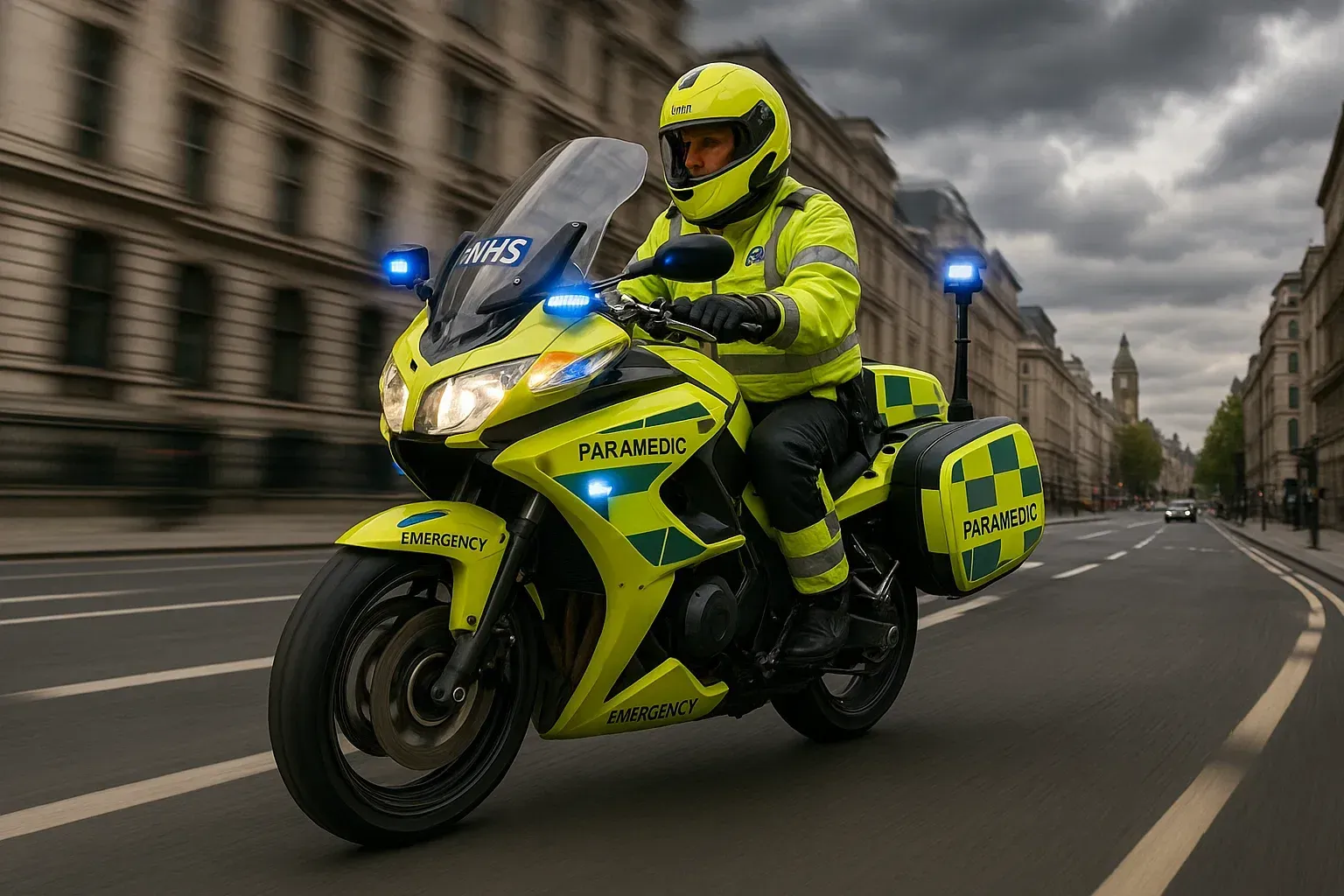
Electric and hybrid ambulances and response vehicles are becoming a more regular part of the funding conversation as operators respond to Clean Air Zone requirements, NHS sustainability commitments and the wider shift toward lower-emission commercial fleets. This does not mean every duty cycle is currently suited to full electrification. Route length, response time requirements, patient acuity, equipment power draw and depot charging capability all need to be weighed against the operational reality of running an emergency vehicle that cannot afford to run out of charge mid-response.
Battery range, expected duty cycle, depot charging infrastructure and total cost of ownership over the life of the vehicle are the practical questions that tend to determine whether an electric or hybrid vehicle is the right fit for a given role within the fleet. For many operators, the realistic path is a staged transition, moving lower-mileage or depot-based roles onto electric or hybrid platforms first, while frontline response vehicles with higher duty cycles convert later as range, charging infrastructure and vehicle availability mature.
Where a transition involves depot charging infrastructure alongside the vehicles themselves, that infrastructure can often be considered as part of the same wider funding conversation, rather than treated as a separate, unrelated cost. This may sit within broader Fleet Finance planning where an operator is investing in both vehicles and supporting infrastructure at the same time.
The most suitable route depends on the asset, the operator, the term required and the wider commercial objective.
May suit operators who want to spread the cost of a vehicle over an agreed term with fixed repayments and a clear route to ownership once all contractual sums and any option to purchase fee have been paid.
May be relevant where lower monthly payments are wanted by deferring part of the balance to a contractual final payment, subject to vehicle and lender criteria.
May suit operators who already own suitable vehicles and want to release capital, restructure borrowing or support further investment, subject to valuation and lender criteria.
May be relevant where value is tied up in existing fleet assets and the business wants to access part of that value for expansion or contract mobilisation.
Requirements vary by lender, vehicle and structure, but information may include business accounts, management information, bank statements, supplier or converter quotations, vehicle and conversion specification, registration and compliance documentation, contract information for NHS or commissioned work, and details of any existing finance where refinance is involved. Where the operator is contract-led, evidence of the contract position and mobilisation timeline may also form part of the assessment.
The following is a composite, illustrative example built to show how a case in this category is typically approached. It is not a description of one specific client.
Consider a private patient transport operator holding an existing NHS-adjacent contract and needing to replace three ageing PTS vehicles with newly converted units ahead of a contract renewal date. The commercial challenge is not simply financing three vehicles, but coordinating funding with the converter's build slots, ensuring no gap in available fleet capacity during the changeover, and structuring repayments in a way that preserves working capital during the transition period.
In a case of this kind, manual assessment typically matters because the vehicles, the conversion specification, the contract position and the operator's cashflow profile all need proper review rather than a generic scoring approach. A phased funding structure, aligned to the converter's delivery schedule, can allow the operator to bring each replacement vehicle into service as the outgoing vehicle is decommissioned, maintaining service continuity throughout. As with any specialist commercial case, the specific structure available depends on the asset, the operator and lender criteria at the time.
A conversation about the operator, the vehicle or fleet requirement, and the objective behind the funding.
The proposed vehicle, converter, specification, term and deposit are reviewed to identify sensible funding routes.
Supporting information may include accounts, bank statements, quotations, contract details and vehicle specification.
The case is considered against lender criteria, vehicle and conversion suitability, and operator profile.
If approved, terms can be reviewed and accepted subject to any conditions and final checks.
Once satisfied, the transaction completes and the operator proceeds with acquisition, refinance or replacement.
Approval is not based on one factor alone. Lenders may consider the operator profile, trading and contract history, credit background, deposit, invoice value, vehicle and conversion age, condition, intended use, fleet context and whether the asset is viewed as suitable security for the agreement.
Used and converted vehicles can often be considered, but conversion standard, documentation, age and residual profile may influence the structure available. Refinance and equity release may also be possible on suitable existing vehicles where there is sufficient value and the wider case meets lender criteria.
All finance is subject to status, underwriting and lender criteria. Terms, availability and structure depend on the business, the asset and the overall transaction. The purpose is to identify suitable commercial funding routes, not to imply guaranteed approval.

Commercial funding used by operators to acquire, replace or refinance ambulances, rapid response vehicles, patient transport vehicles and related specialist assets used in medical and emergency response operations.
In many cases, yes, subject to vehicle age, mileage, conversion condition, maintenance history and lender criteria.
Yes, in suitable cases, subject to business profile, contract position and lender criteria.
Potentially, yes, subject to the entity structure, financial position and lender appetite.
Yes, in suitable cases, including wheelchair accessible and stretcher-capable conversions, subject to vehicle and business criteria.
Potentially, yes, where there is sufficient value in the existing vehicle and the case meets lender criteria.
Yes, in most cases, subject to conversion quality, provenance and lender assessment.
Yes, in suitable cases, subject to vehicle type, duty cycle, business profile and lender criteria.
In many cases, yes, where equipment such as stretcher systems or oxygen installations forms part of the conversion.
Yes, in suitable cases, with multiple vehicles funded together or in stages as a coordinated fleet transaction.
Typically business accounts, bank statements, supplier or converter quotations, vehicle and conversion details, contract information and existing finance details where relevant.
Operator profile, trading history, contract position, deposit, vehicle and conversion age, condition, intended use and lender appetite.
Yes, in suitable cases, as a core client group for this type of finance.
Yes, in suitable cases, on ambulances, welfare units and rapid response vehicles.
Yes, individually or as part of a wider fleet transaction.
Potentially, yes, subject to the vehicle specification and lender criteria.
Start-up operators may be considered, though structure, deposit and lender appetite may differ from an established operator.
Potentially, yes, subject to valuation, existing borrowing and lender criteria.
Yes, vehicle age, mileage, conversion condition and remaining service life are typically considered alongside the operator profile.
In some cases, yes, as part of a wider asset finance conversation around an electric or hybrid fleet transition.
Coordinated funding for multi-vehicle and phased fleet transactions.
Funding for panel vans and light commercials used in wider operations.
For operators also running passenger transport alongside medical fleets.
Specialist finance for hearses, limousines and private ambulances.
At Avro Finance, we know that every second counts. That's why we make it easy to apply for the finance you need without the hassle.
Apply now or enquire today to find out how we can help you secure the vehicles needed to keep your operations running smoothly.