Commercial Solar Finance UK 2026 | HP, Lease & PPA Compared | Avro Finance Skip to content
Commercial solar finance

Commercial Solar Finance For UK Businesses

Hire purchase, lease and PPA compared for 50kW to 200kW rooftop solar, with the Annual Investment Allowance worked through properly, not glossed over. Built for manufacturers, warehouses, farms, care homes, hotels and cold stores with a big roof and a big daytime load.

50kW-200kW rooftop systems AIA-eligible hire purchase Business finance only, not domestic
Typical deal size £50,000 to £200,000 of installed system value.
Typical system 50kW to 200kW rooftop solar PV, new installation.
Who this is for Ltd companies, LLPs, sole traders and partnerships, business use only.
The tax point Hire purchase preserves AIA relief; a PPA or operating lease does not.

Most commercial solar content online is written by installers, and it treats finance as an afterthought, usually one paragraph comparing a loan to a lease without touching what either route does to the business's tax position. That is the gap this page fills. Avro is a finance broker, not an installer. We arrange asset finance for commercial rooftop solar, structure it against the business's tax position, and are upfront that whether a purchase is the right call for your particular accounts is a conversation for your accountant, not us. Our job is to get the finance structured correctly around the answer.

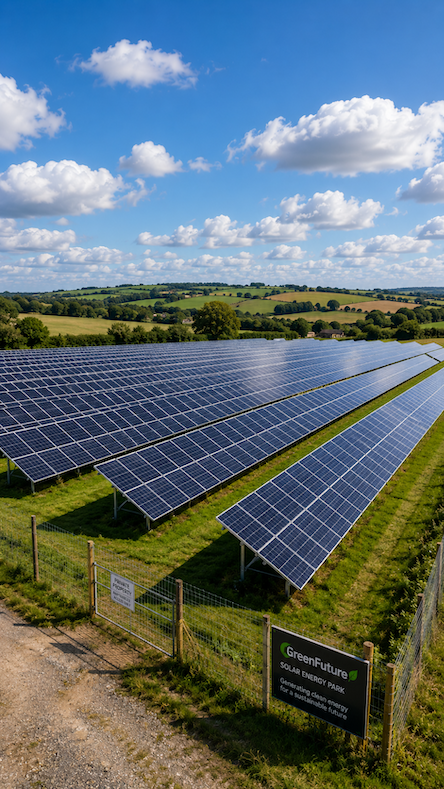
Aerial view of a logistics warehouse roof covered in commercial solar panels, with freight trucks at the loading docks
All six routes, compared

How Businesses Actually Pay For Commercial Solar

Six routes exist. Only two of them let the business keep the Annual Investment Allowance.

Route Upfront cost Ownership Balance sheet Capital allowances Typical term Best suited to
Capital purchase Full cost, day one Business, immediately Asset on balance sheet Full AIA available N/A Cash-rich businesses with no appetite for finance
Hire purchase Deposit only, typically 0-20% Business, on final payment Asset on balance sheet from day one Full AIA available, same as cash purchase 3-10 years Businesses wanting the tax relief without tying up capital
Finance lease None or minimal Funder, business has use of asset Asset usually on balance sheet under lease accounting rules No AIA; rentals are a deductible expense instead 5-10 years Businesses without profits to shelter, or preferring rental deductions
Operating lease None Funder throughout Off balance sheet in most cases No AIA; rentals deductible 3-7 years Businesses prioritising off-balance-sheet treatment over ownership
PPA None Third party owns and maintains the system Off balance sheet None; business buys electricity, not the asset 10-25 years Businesses wanting zero capex with no interest in ownership
Green loans & grants Varies by scheme Business Asset on balance sheet Full AIA available where the business owns the asset Varies Businesses that qualify for a live scheme, used alongside other finance for the balance

This table is a simplified comparison. Balance sheet and lease accounting treatment depends on the specific contract terms and applicable accounting standard (FRS 102 or IFRS 16), and should be confirmed with the business's accountant before a route is chosen.

Growth Guarantee Scheme: some of Avro's funder panel can lend hire purchase for commercial solar under the British Business Bank's Growth Guarantee Scheme, a government-backed lending guarantee that can improve the terms available on a qualifying deal. Availability depends on the funder, the borrower and the specific transaction; ask us whether your business qualifies.

The point most competitors skip

Why Hire Purchase Usually Wins The Argument

Solar PV is normally treated as special rate plant and machinery for capital allowances purposes. Without the Annual Investment Allowance, it would depreciate slowly through the special rate pool. With it, a business can deduct up to £1,000,000 of qualifying spend against taxable profit in the year the asset is bought, a limit that has applied since 2019 and was made permanent from April 2023. Almost every system in the 50kW-200kW range sits comfortably inside that limit.

The allowance depends on the business owning the asset for tax purposes. Under hire purchase, ownership is treated as passing at the start of the agreement even though the final payment is still outstanding, so AIA is available in exactly the same way as a cash purchase. Under a finance lease, operating lease or PPA, the funder or a third party owns the asset, so the business gets a rental deduction or nothing at all instead of the allowance. For a profitable company, that is the difference between a five-figure reduction in this year's corporation tax bill and no immediate relief whatsoever. It is the single biggest lever in this decision, and it is the reason hire purchase is usually the right starting point for a business that expects to be profitable in the year of purchase.

Commercial Solar Finance Calculator

Enter your own numbers. Every figure is shown, nothing is hidden in the total.

System size (kWp) 100 kWp
Estimated install cost (£, ex VAT) £85,000
Auto-estimated from system size. Overwrite with a real installer quote where you have one.
Site electricity use per year 120,000 kWh
Take this from your electricity bills in kWh. Commercial bills often include standing and capacity charges that solar generation does not directly avoid.
Indicative assumptions, not site-specific load modelling.
Electricity unit rate 25p/kWh
Export rate 6p/kWh
Commercial export rates vary by supplier and contract. The default is illustrative only.
Partially exempt? Use a tailored quotation, since recoverability depends on your business's actual VAT position.
Considering a lease or PPA? These products depend on contract-specific pricing, initial rentals, residual terms, electricity rates and other conditions that cannot be accurately modelled using a generic calculator. See the six-route comparison above for how they compare, or contact us for a tailored proposal.
Term 120 months
Deposit 0%
Enter a custom tax rate as a percentage.
This is an illustrative tax rate only. Corporation tax marginal relief, associated companies and actual taxable profits can materially change the result.

Year 1 Cash Position Before Tax

£0
Calculating
A. What The System Generates
Estimated Year 1 generation -
Used on site -
Exported -
Electricity cost avoided -
Export income -
Running costs & insurance -
Net annual solar benefit -
B. What The Finance Costs
Installation cost, ex VAT -
VAT at inception -
Deposit at inception -
Amount financed -
Monthly HP payment -
Total of monthly payments -
Total finance charge -
C. Potential Tax Position
Potential AIA deduction -
Illustrative potential tax reduction -

Assumes sufficient taxable profits, enough unused AIA, and that the spend qualifies. On hire purchase, if the panels count as a fixture of the building, relief can follow the capital paid each year instead of arriving in full in year one, so check the timing with your accountant. Not included in the cumulative cash figures below. This is an illustration, not tax advice.

D. Cumulative Cash Position Before Tax
Year 1 -
Year 5 -
Year 10 -
Year 25 -
Regulatory note: Based on the figures entered, the amount of credit may fall at or below the £25,000 business-purpose exemption threshold. The regulatory status of the agreement would need to be assessed before finance can be confirmed.
Get A Tailored Quote

Illustration only, not a quote, offer or tax advice, subject to survey and funder credit approval. See the full calculator page for the assumptions behind every figure. Avro arranges commercial business finance. The regulatory treatment of agreements involving individuals, sole traders or partnerships depends on the borrower, amount of credit and agreement structure.

Worked examples

Three Systems, Full Workings Shown

Assumptions used throughout: 850 kWh generated per installed kWp in Year 1 (a conservative UK-wide illustration), 65% self-consumption on a mixed daytime-load business, electricity at 25p/kWh, export at 6p/kWh, running costs and insurance at £12/kWp/year, hire purchase at an illustrative 8.5% nominal annual rate paid in advance over 120 months, VAT fully recoverable, 25% corporation tax. These match the defaults in the calculator above; run your own numbers there for a different profile. Verify against your own energy contract and confirm current AIA and corporation tax rules before relying on these figures.

50kW System

Install cost £47,500
Year 1 generation 42,500 kWh
Self-consumed (65%) 27,625 kWh
Saved at 25p/kWh £6,906
Exported 14,875 kWh
Export income at 6p/kWh £893
Running costs & insurance -£600
Net annual solar benefit £7,199
HP payment, 120mo @ 8.5% (advance) £585/mo, £7,018/yr
Year 1 cash position before tax +£181/yr
Potential AIA reduction at 25% up to £11,875

100kW System

Install cost £85,000
Year 1 generation 85,000 kWh
Self-consumed (65%) 55,250 kWh
Saved at 25p/kWh £13,813
Exported 29,750 kWh
Export income at 6p/kWh £1,785
Running costs & insurance -£1,200
Net annual solar benefit £14,398
HP payment, 120mo @ 8.5% (advance) £1,046/mo, £12,558/yr
Year 1 cash position before tax +£1,840/yr
Potential AIA reduction at 25% up to £21,250

200kW System

Install cost £155,000
Year 1 generation 170,000 kWh
Self-consumed (65%) 110,500 kWh
Saved at 25p/kWh £27,625
Exported 59,500 kWh
Export income at 6p/kWh £3,570
Running costs & insurance -£2,400
Net annual solar benefit £28,795
HP payment, 120mo @ 8.5% (advance) £1,908/mo, £22,899/yr
Year 1 cash position before tax +£5,896/yr
Potential AIA reduction at 25% up to £38,750

Term matters as much as system size, and it can flip the sign. Taking the 100kW system on a shorter 84-month term instead of 120 months pushes the HP payment to roughly £1,337/month, £16,040/year, which leaves the business with a net cash investment required in Year 1 of around £1,642, before any tax relief. Stretching to 120 months lowers the payment enough to leave the deal roughly £1,840/year cash positive instead. Neither figure includes the AIA saving, which applies in Year 1 regardless of term length and is shown separately since it depends on the business having sufficient taxable profits. The right term depends on how the business wants to trade off monthly cashflow against total interest paid over the life of the agreement, and running your own figures through the calculator above is more reliable than defaulting to the shortest or longest option.

Real profiles, illustrative numbers

How This Looks Across Different Sites

Three illustrative sector profiles. Names and exact figures are composite examples, not real clients, built to show how the same maths plays out differently by roof and load.

Lincolnshire arable farm

A 150kW array across a barn roof, sized against grain drying and irrigation pumps running through late summer daytime hours. High daytime self-consumption during harvest makes the export share smaller than a typical warehouse, and AIA is particularly valuable where farm profits are lumpy year to year, since it lets the business time the relief against a strong trading year.

Midlands distribution warehouse

A 200kW roof array sized against a chiller and refrigeration load that runs close to flat across the day, giving very high self-consumption and a fast payback. Warehouses with continuous cold storage or automated handling equipment are typically the strongest commercial solar case, since almost none of the generation needs to be exported at the lower commercial rate.

40-bed care home

A 60-80kW system against a genuinely flat daytime and evening load from heating, hot water, laundry and kitchen equipment. Care homes rarely have large roof areas relative to load, so the system is usually sized to the available roof rather than to total consumption, with the finance structured around a modest deposit to protect working capital.

Who this is for

Built For The Business With A Roof And A Daytime Load

1

Manufacturers & warehouses

Large flat roofs and a heavy daytime process or refrigeration load.

2

Farms

Barn and outbuilding roofs against drying, cooling and pumping loads.

3

Care homes & hotels

Continuous heating, hot water and kitchen load across a long day.

4

Cold stores & retail landlords

Constant refrigeration load or a large single-tenant roof asset.

Eligibility & Important Information

Avro arranges commercial solar finance for limited companies, LLPs and self-employed commercial entities, for business use only. Deals of this size, £50,000 to £200,000, are well above the £25,000 threshold UK law (FSMA, article 60C) sets for a business finance agreement to qualify as exempt from consumer credit regulation, so this applies equally whether the business trades as a limited company, a sole trader or a partnership.

Avro Asset Finance is a trading name of Avro Fleet Ltd. We do not provide consumer credit or regulated financial products; we arrange unregulated business finance agreements only, and this does not carry the same protections as a regulated consumer credit agreement. We are a broker, not a lender, and we receive commission from funders on completed deals, which varies by funder.

Nothing on this page is a quote, an offer, or tax advice. All figures are illustrative, subject to survey, funder credit approval and site-specific factors. Confirm current AIA limits, corporation tax rates and HMRC treatment of your specific circumstances with your accountant before proceeding.
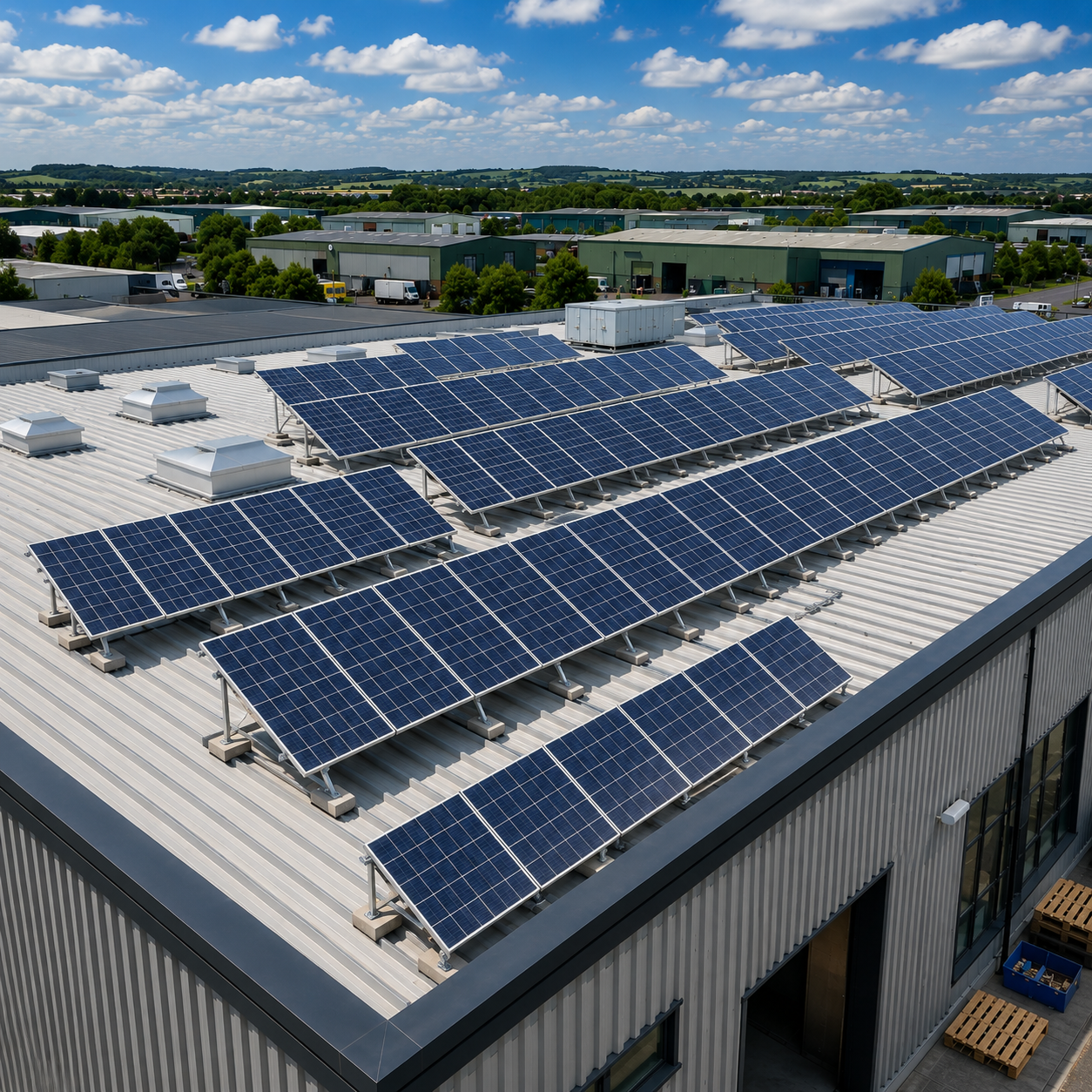
Industrial building roof fitted with rows of commercial solar panels
Common questions

Commercial Solar Finance FAQs

Can a business finance solar panels through Avro?

Yes. Avro arranges asset finance for commercial rooftop solar PV, typically 50kW to 200kW systems, for limited companies and established sole traders, structured as hire purchase, lease or refinance.

Does hire purchase let a business claim the Annual Investment Allowance on solar panels?

Yes. Under hire purchase the business is treated as the owner of the asset from the outset for tax purposes, so it can claim AIA in the same way as a cash purchase, subject to the annual limit and normal HMRC rules.

Can a business claim the Annual Investment Allowance on a solar PPA?

No. Under a PPA the business does not own the panels, so no capital allowances are available. The business buys electricity at an agreed rate instead of owning the asset.

What is the Annual Investment Allowance limit for solar PV?

£1,000,000 per accounting period, a limit that has applied since 2019 and was made permanent from April 2023. Almost every 50kW-200kW commercial system sits well within this.

How much does a 100kW commercial solar system cost in the UK?

Roughly £75,000 to £105,000 installed as of 2026, depending on roof type, access and site complexity, before tax relief.

Can a sole trader or farm partnership get commercial solar finance?

Yes, provided the agreement is for business purposes and exceeds £25,000, which most commercial solar systems comfortably do, qualifying the deal as exempt from consumer credit regulation.

What happens to solar finance if the business or building is sold?

This depends on the finance route. Outstanding hire purchase or lease balances do not automatically transfer, so it needs addressing specifically before a sale or lease assignment is agreed.

Is a PPA or hire purchase better for a business installing solar?

It depends on the business's tax position. Hire purchase preserves the AIA and builds equity in an owned asset. A PPA needs no capital outlay but forgoes ownership and capital allowances.

Where next

Related Finance Solutions

Fleet Finance

For businesses financing vehicles as well as solar and infrastructure.

HGV Finance

For logistics and haulage operators with warehouse roof space.

Van Finance

For businesses financing vans alongside a solar installation.

Get A Tailored Commercial Solar Finance Quote

Tell us your system size, roof type and whether you already have an installer quote, and we'll come back with a structured proposal.

Share by: