Slow & Standard
Typically up to 7kW. Suited to overnight depot charging or workplace bays where a vehicle is parked for several hours.

EV charging infrastructure finance is asset finance for the chargepoints, installation and supporting equipment a business needs to charge its own fleet or offer charging to staff, tenants and the public. Avro arranges this whether you're installing a handful of workplace chargers or rolling out a multi-site depot charging network.
EV charging infrastructure finance is a form of business asset finance: because chargepoints and their installation are used to run or support the business, whether that's charging a fleet overnight, offering staff charging during the working day, or operating a public network, they qualify as a business asset. That means the cost can be spread over fixed monthly payments rather than paid as a single upfront sum. Avro funds this asset finance from £20,000 upward per installation, for businesses at every stage of electrification, from a first small workplace installation through to established charge point operators managing chargers across dozens of sites.
Adjust the figures below to estimate an indicative monthly payment for a charging installation.
Estimated Monthly Payment
This calculator is for illustration only and does not account for any Workplace Charging Scheme grant you may be eligible for. Actual finance terms depend on lender approval, business profile, deposit, project scope and underwriting. It does not guarantee acceptance or a specific rate.
EV charging infrastructure finance is asset finance for the equipment and installation work behind a chargepoint, not just the charger itself.
Because the installation supports or generates income for the business, whether that's an internal fleet depot, staff charging during the working day, or a public-facing network, it qualifies as a business asset. The finance is arranged against the business and the project, in the same way a van qualifies for a courier business or a specialist vehicle qualifies for a trade.
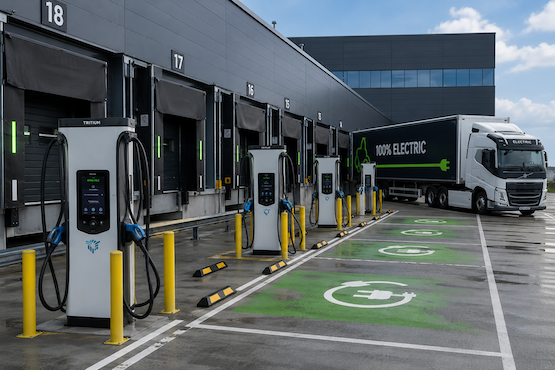
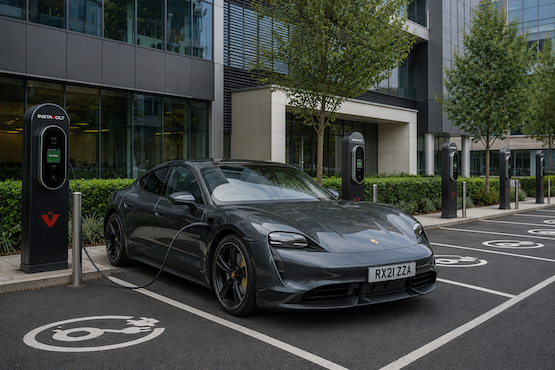
The right power rating depends on how long vehicles are parked and how quickly they need to turn around.
Typically up to 7kW. Suited to overnight depot charging or workplace bays where a vehicle is parked for several hours.
Generally 7kW to 22kW. The common choice for workplace car parks and destination charging over a few hours.
From 43kW up to 350kW. Used where vehicles need to turn around quickly, fleet depots on tight schedules and public charging hubs.
Two separate government grants can reduce the upfront cost, depending on what you're installing. Both are applied for directly, not through Avro, and Avro's finance is arranged around whatever cost isn't covered.
For workplace car parks and staff charging, administered by OZEV.
Purchase and installation, including VAT.
For installs completed from 1 April 2026 (£350 before).
Across all sites, per applicant. £20,000 theoretical cap.
Final year of the scheme, closing 31 March 2027.
For HGV, van and coach fleet depot charging, administered by DfT and OZEV.
Chargepoints and civil works. Window 1 rate; later windows may reduce.
Across all depot sites, not per site.
Must own, lease or have ordered at least one battery-electric vehicle.
£170m across successive windows. Window 1 closed 30 June 2026; window 2 opens 28 October 2026.
A separate scheme for private landlords and property management companies, not the Workplace Charging Scheme.
Same rate as the Workplace Charging Scheme.
Across all sites, a much higher cap than the 40-socket workplace limit.
Private landlords, social housing providers and managing agents.
Through the official government grants portal, separately from Avro's finance.
Important: These are UK government grants administered by OZEV and DfT, not by Avro. Rates, caps and windows are set by the schemes and can change, so always check current eligibility on the official government grants portal before applying. Avro does not administer, guarantee or apply for any of these grants on your behalf; our finance is arranged around the cost that isn't covered by whichever grant you secure.
Whatever's driving the installation, the underlying product is the same: asset finance against the equipment and works, sized to the project.
Businesses installing charging for their own vans, cars or larger vehicles, typically overnight or between shifts.
Property owners adding charging for tenants, staff or visitors. A separate landlord chargepoint grant, up to £500 per socket for up to 200 sockets, may apply.
Destination charging for customers as a way to extend dwell time and add a new site amenity.
Businesses building out and operating public charging networks across multiple sites.
The right structure depends on whether this is a first installation, a fleet-wide rollout, or a refinance of infrastructure you already own.
Spreads the cost of hardware and installation over an agreed term with fixed monthly payments, with ownership passing once all payments are made.
Defers part of the balance to a final payment at the end of the term, which can lower the monthly cost during the agreement.
Releases capital from charging infrastructure you already own outright, useful for funding the next phase of a rollout or general working capital.
Projects are assessed on the business and the site, not run through a generic automated scorecard.
The same product scales from one workplace installation to a phased multi-site programme.
Installation and civil works can be financed alongside the chargepoint hardware itself, not as a separate cost.
Predictable costs that make it easier to plan a wider electrification budget.
Number of sockets, power rating, and whether it's a single site or the start of a rollout.
We look at the trading position behind the project, whatever your business structure.
Deposit, term and structure are set against the project, accounting for any grant funding separately.
Once terms are agreed and documents are signed, funds are released so installation can proceed.
Requirements vary by lender and project scope, but you may be asked for a site survey or installer's quote, the planned number of sockets and power rating, proof of business or property ownership or lease, business bank statements, and your Workplace Charging Scheme voucher reference if you've already applied for the grant separately.
The Workplace Charging Scheme, the Depot Charging Scheme and the landlord chargepoint grant are all separate UK government grants administered by OZEV and DfT. Avro does not administer, guarantee or apply for any of these grants on your behalf; they are applied for directly through the official government grants portal, and eligibility, timing and amounts are set by the schemes, not by Avro.
Important: This is asset finance, arranged against the chargepoint hardware and installation itself. Avro funds EV charging infrastructure asset finance from £20,000 and above per installation; deals below this threshold fall outside what this product is structured for. Avro arranges unregulated business finance agreements for limited companies and self-employed commercial entities, for business use only. This is not consumer credit and does not provide the same protections as a regulated consumer finance agreement.

EV charging infrastructure finance is asset finance for the chargepoints, installation and supporting equipment a business needs to charge its own fleet or offer charging to staff, tenants or the public. The cost is spread over fixed monthly payments rather than paid upfront.
Avro funds EV charging infrastructure asset finance from £20,000 and above per installation. Smaller installations fall below what this product is structured for.
Chargepoint hardware, installation and civil works such as groundworks and cabling, load management and smart charging systems, canopies and solar integration, and associated back-office or billing software can typically be included in the finance.
The Workplace Charging Scheme is a separate UK government grant, administered by OZEV, that contributes toward the cost of eligible chargepoint installations. Avro does not administer or guarantee this grant. Businesses apply for it directly, and Avro's finance is arranged around the cost that isn't covered by the grant.
For installations completed from 1 April 2026, the scheme covers up to 75% of eligible purchase and installation costs, up to £500 per socket, for a maximum of 40 sockets across all sites. The scheme is in its final year and is due to close on 31 March 2027.
Yes, the Depot Charging Scheme, a separate DfT and OZEV grant for fleets operating at least one battery-electric van, HGV or coach. It can cover up to 70% of eligible chargepoint and civil works costs, capped at £1 million per organisation across all sites, and runs in successive funding windows through to 2030.
No, they're separate schemes. The landlord chargepoint grant offers the same £500 per socket rate but allows up to 200 sockets across all sites, compared with the Workplace Charging Scheme's 40-socket cap.
Yes. Avro arranges finance for single-site installations and multi-site rollouts alike, with sites added in phases where that suits the business.
Potentially, yes. Asset refinance may be available on existing charging infrastructure you already own, subject to equity position and lender criteria.
Yes. Commercial landlords and property owners installing charging infrastructure for tenants, staff or visitors can apply on the same business finance basis as fleet operators, and may also be eligible for the separate landlord chargepoint grant.
Workplace charging serves staff vehicles during the working day, depot charging serves a business's own fleet overnight or between shifts, and public charging is open to any driver, typically at a higher power rating to reduce dwell time. The finance works the same way regardless of which type is being installed.
No. Avro arranges unregulated business finance agreements for limited companies and self-employed commercial entities, and does not provide consumer credit or regulated financial products.