£45m
Final planned round
ScotZEB3 was presented as the third and final planned round, with up to £45 million available for zero-emission buses and related infrastructure.

Avro supports bus operators, coach businesses, school transport providers and wider passenger transport firms with specialist finance for new and used buses, coaches, minibuses, fleet replacement and refinance. This is commercial asset funding shaped by vehicle value, operational use, replacement planning, cashflow and specialist underwriting rather than standard retail motor finance.
Bus and coach finance is a specialist part of commercial asset funding because these vehicles sit inside real operating businesses with route demand, contract pressures, maintenance exposure, replacement cycles and working capital demands to manage. A single minibus purchase, a replacement executive coach, a staged fleet refresh or a refinance strategy against existing vehicles can all raise different underwriting and structuring questions, which is why a more considered commercial funding approach often matters.
ScotZEB3 is the third and final planned round of Scotland's Zero Emission Bus Challenge Fund, with up to £45 million available to support the rollout of electric and hydrogen buses along with related charging or refuelling infrastructure. It is aimed at accelerating the replacement of diesel vehicles on registered local bus services and helping operators move earlier toward zero-emission fleet requirements.
The key commercial point is that ScotZEB3 is a partial grant, not full project funding. The programme can contribute set amounts toward qualifying zero-emission buses, including up to £57,500 for a new minibus, up to £101,000 for a mid-size bus, up to £122,000 for a full-size electric bus, and up to £50,000 for eligible diesel-to-electric repowering. It can also cover up to 70% of eligible charging or refuelling infrastructure cost, which matters because depot charging and grid works can be expensive.
Operators still need to fund the remaining balance, and that is where specialist commercial finance can matter. In practice, the requirement may involve funding the shortfall on new vehicles, supporting depot infrastructure not fully covered by grant, or structuring the wider fleet transition in a way that works commercially. ScotZEB3 was administered by the Energy Saving Trust on behalf of Transport Scotland as a competitive challenge fund, so the strength of the project, deliverability and commercial structure all mattered rather than funding being automatic.
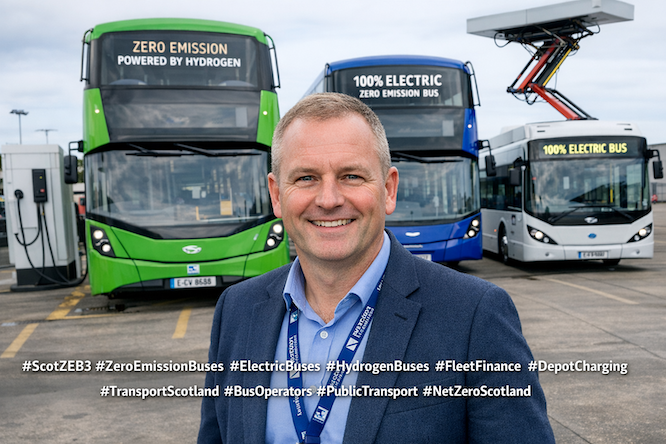
ScotZEB3 was presented as the third and final planned round, with up to £45 million available for zero-emission buses and related infrastructure.
Up to 70% of eligible charging or refuelling infrastructure cost could be supported, helping operators address depot and grid-related capital cost.
Grant support covers only part of the cost, so operators still need a commercial funding route for the remaining project balance.
If you are reviewing a ScotZEB3-backed purchase or a wider zero-emission fleet transition, Avro can discuss finance for the balance not covered by grant support, subject to the asset, operator profile, structure and lender criteria.
Adjust the figures below to estimate indicative monthly payments for a bus, coach or fleet vehicle purchase.
Estimated Monthly Payment
This calculator is for illustration only. Actual finance terms depend on lender approval, borrower profile, deposit, vehicle type, age, structure, underwriting and lender criteria. The business profile selector is used only to estimate the illustration and does not guarantee acceptance or a specific rate.
Bus and coach finance is used by a wide range of commercial operators, and the funding requirement is not the same in every case. A school transport provider replacing time-sensitive fleet vehicles ahead of a new contract year has a different commercial profile from a private coach hire operator buying an executive vehicle for longer-distance work, or a community transport business balancing vehicle suitability against budget constraints. That is why a serious broker in this sector needs to reflect operator reality rather than treating all passenger transport businesses as one generic category.
Typical clients may include private coach hire businesses, school and education transport providers, airport transfer and shuttle operators, tour operators, local PSV businesses, community transport organisations, contract-led passenger transport operators and firms adding vehicles as service demand grows. Each may be dealing with different route lengths, passenger volumes, term-time demand, seasonal income patterns, utilisation levels and maintenance planning pressures. A funding structure that makes sense for one operator may be the wrong fit for another even when the vehicle type looks similar on paper.
The commercial logic behind the purchase matters as well. Some businesses are replacing a vehicle that has reached the point where maintenance burden or downtime risk no longer makes sense. Others are expanding the fleet because contract demand, route growth or a change in service mix requires more capacity. In other cases, the need is strategic rather than immediate, such as preserving working capital, smoothing capital expenditure over time or refinancing suitable existing vehicles to support broader business planning.
Passenger transport funding also brings asset-specific considerations. Vehicle age, mileage, operator maintenance standards, expected service life, residual profile and resale route all matter, especially where older or specialist passenger vehicles are involved. That is one reason the most suitable route may overlap with broader Commercial Vehicle Finance, Fleet Finance or even wider Asset Finance planning where the business is looking beyond one isolated purchase.
Suitability depends on the asset, the operator and the structure, not simply whether the vehicle is new or used.
Often relevant where operators want longer forward service life, lower early maintenance exposure and a clear replacement cycle.
Can be practical where the business wants to control capital outlay and the vehicle has suitable age, condition and history.
May sit between new and older used vehicles, but still requires sensible valuation, supplier and condition review.
Can be considered in some cases, but the standard of refurbishment, remaining service life and resale market matter.
Financing a new coach is not the same as financing an older used bus, and it would be lazy to pretend otherwise. New vehicles may offer a stronger forward operating life and a cleaner maintenance outlook in the earlier years, but they also bring higher invoice values and larger capital commitments. Used vehicles can often be sensible where the operator is balancing cost, route suitability and budget, but age, mileage, maintenance record, provenance and realistic remaining service life may carry more weight in the assessment.
Ex-fleet vehicles, demonstrators, nearly-new stock and professionally refurbished passenger vehicles can also sit in the middle of the market. Some may offer good commercial value. Others may look cheaper initially but carry a weaker residual position or more uncertain maintenance exposure. In practice, lender appetite is shaped by the asset itself, how the vehicle is expected to perform within the business and whether the overall case makes commercial sense.
Some bus and coach transactions are straightforward single-vehicle purchases. Others involve several vehicles acquired together, phased fleet replacement over time or staged procurement linked to contract start dates and operational demand. The commercial point is not simply how many vehicles are being purchased, but how the structure fits the operator's wider plan.
A single vehicle may be funded to replace an ageing unit, support a new route or add capacity where demand has outgrown the existing fleet. Multi-vehicle funding may make more sense where a business wants to standardise parts of the fleet, coordinate deliveries or avoid repeated capital shocks across several financial periods. In those cases, the funding discussion may sit naturally alongside broader Fleet Finance planning rather than being treated as an isolated vehicle purchase.
The strongest structure is usually the one that balances capital expenditure, service continuity, working capital and replacement timing. That may mean one vehicle now and another later. It may mean a coordinated fleet transaction. Either way, the business case should lead the structure, not the other way round.
Electric and low-emission bus funding is becoming more relevant as operators review route suitability, depot planning, emissions exposure and future replacement cycles. That does not mean every fleet should move at the same pace or in the same way, but it does mean funding discussions increasingly involve electric buses, hybrid vehicles, staged fleet transition and the wider commercial planning that sits around them.
The practical issues are broader than the vehicle invoice alone. Route length, passenger load, charging position, depot readiness, duty cycle, maintenance strategy and expected retention period all matter. A low-emission vehicle that works well for one route profile may be the wrong fit for another. That is why the use case still has to lead the conversation rather than forcing the technology into an operating model that does not suit it.
Upfront cost also matters. Electric buses can involve materially higher capital outlay than conventional alternatives, which is why finance may form part of a staged transition strategy rather than a one-off fleet overhaul. Some operators may replace only part of the fleet first. Others may combine grant-backed initiatives, internal capital and commercial funding. Where infrastructure is part of the wider plan, the conversation may also overlap with broader Asset Finance requirements beyond the vehicles themselves.
The sensible position is that electric and hybrid bus funding should be assessed case by case. Vehicle suitability, route profile, charging practicality, operator profile and lender appetite all matter. This is not an area for generic claims. It is an area where commercial planning has to be grounded in how the fleet will actually operate.
Fleet replacement is usually a business planning exercise before it is a finance exercise. Operators have to think about reliability, downtime, maintenance burden, contract performance, passenger standards and capital allocation over time. A vehicle may still be operational, but if workshop demands are rising, downtime risk is becoming harder to manage or the vehicle no longer fits the service standard expected by the business, replacement may need to be considered before failure forces the issue.
Timing matters because replacing too late can mean rising repair cost and weaker resale value, while replacing too early may not make best use of the asset. The strongest replacement plan is usually the one that looks several years ahead rather than treating every purchase as a one-off event. That may mean replacing one vehicle at a time, phasing a fleet refresh across several periods or refinancing suitable vehicles to improve flexibility while a longer-term replacement strategy is put in place.
Funding is one tool within that wider planning exercise. It may help spread cost, preserve working capital, support service continuity and align vehicle acquisition with the operator's commercial objectives. Where several vehicles are involved, the discussion may also overlap with Commercial Vehicle Finance, Fleet Finance and Asset Refinance strategy, especially where the operator wants to restructure existing borrowing or plan a more controlled replacement cycle.
An Avro transaction in this area involved a commercial operator replacing an existing passenger vehicle as part of wider fleet planning rather than a one-off reactive purchase. What made the case specialist was the need to balance the vehicle requirement against service continuity, cashflow and the operator's broader commercial position, rather than treating it as a standard retail-style motor finance application.
Manual assessment mattered because the asset, usage profile and commercial rationale needed proper review. The structure supported the operator's objective of securing the replacement vehicle within a manageable funding framework while preserving capital for the wider business. As with any specialist commercial case, the detail depended on the asset, the business and lender criteria at the time.
For many operators, bus and coach funding is part of a wider procurement plan rather than a simple price comparison exercise. Lead times, supplier availability, build slots, stock availability, route start dates, seasonal demand and contract commitments can all affect when funding needs to be in place and how the transaction should be structured.
Some businesses are buying from available stock. Others are planning around used market sourcing, specialist vehicle availability or staged delivery of multiple units. The commercial problem may be avoiding service gaps, preserving capital while vehicles are phased into operation or aligning funding with existing borrowing and replacement plans.
The best route depends on more than headline monthly payment. Deposit strategy, term, expected retention period, maintenance exposure, disposal timing and working capital priorities all matter. In some cases, the discussion may extend into wider Asset Refinance or Asset Finance planning where the operator is managing multiple vehicles or broader operational assets.

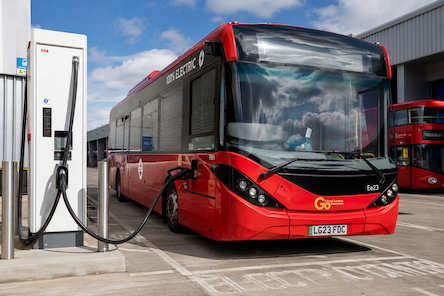
The most suitable route depends on the asset, the business, the term required and the wider commercial objective.
Hire Purchase may suit operators who want to spread the cost of a bus or coach over an agreed term with fixed repayments and a clear route to ownership once all contractual sums and any option to purchase fee have been paid. It can work well where the business expects to retain the vehicle over time and wants repayment certainty.
Lease Purchase may be relevant where the operator wants lower monthly payments by deferring part of the balance to a contractual final payment. This can help where cashflow, replacement planning and anticipated value all need to be balanced, but the structure still has to be appropriate for the vehicle and lender criteria.
Refinance may suit operators that already own suitable buses or coaches and want to release capital, improve cashflow, restructure borrowing or support further investment. In some cases this sits within a wider Asset Refinance strategy, subject to valuation support, asset suitability and lender criteria.
Equity release may be relevant where value is tied up in existing fleet assets and the business wants to access part of that value for replacement planning, growth or broader commercial use. The amount available depends on valuation, existing borrowing, vehicle profile and lender appetite.
Documentation requirements vary depending on the lender, the vehicles and the structure being considered. Information may include business accounts, management information, bank statements, supplier quotations, vehicle details, registration information, age, mileage, maintenance history, fleet schedules and details of any existing finance where the case involves refinance.
Where the operator is contract-led, wider business context may also matter. The exact documents required depend on the case, the lender and the commercial circumstances. The point is not to ask for paperwork for the sake of it. It is to support proper assessment of the business, the vehicles and the proposed transaction.
This page is aimed at businesses making commercial funding decisions around passenger vehicles and fleet assets.
Businesses replacing individual vehicles, adding capacity or planning fleet renewal without tying up unnecessary capital in one period.
Operators reviewing multiple vehicles, route growth, staged procurement, refinance or wider working capital planning.
Established businesses where the asset, commercial rationale and structure need proper manual assessment rather than generic retail-style scoring.
A conversation about the operator, the vehicle requirement and the commercial objective behind the funding.
The proposed asset, supplier, term, deposit and intended use are reviewed to identify sensible funding routes.
Supporting information may include business accounts, bank statements, quotations, vehicle details and operational context.
The case is considered against lender criteria, vehicle suitability, operator profile and the structure requested.
If approved, terms can be reviewed and accepted subject to any conditions, documentation and final checks.
Once satisfied, the transaction completes and the operator can proceed with acquisition, refinance or planned replacement.
Approval is not based on one factor alone. Lenders may consider the operator profile, trading history, credit background, deposit, invoice value, vehicle age, mileage, condition, intended use, fleet context and whether the asset is viewed as suitable security for the agreement.
Used buses and coaches can often be considered, but age, condition, maintenance record and residual profile may influence the structure available. Refinance may also be possible on suitable existing vehicles where there is sufficient value and the wider case meets lender criteria.
All finance is subject to status, underwriting and lender criteria. Terms, availability and structure depend on the business, the asset and the overall transaction. The purpose is to identify suitable commercial funding routes, not to imply guaranteed approval.

Bus and coach finance is commercial funding used by operators and transport businesses to acquire or refinance buses, coaches, minibuses and related passenger transport vehicles used within day-to-day operations.
In many cases, yes. Used buses can be considered, subject to vehicle age, condition, mileage, maintenance history, business suitability and lender criteria.
Potentially, yes. Used coaches may be considered where the asset, supplier, operator profile and wider commercial case support the transaction.
In some cases, yes. Multiple buses or coaches may be funded together or in stages where the fleet requirement, asset mix and lender criteria support a coordinated commercial transaction.
Potentially, yes. Refinance may be available on suitable existing buses or coaches where there is sufficient value and the wider case meets lender criteria.
Yes, in suitable cases. Electric buses and selected low-emission passenger vehicles may be considered, subject to vehicle type, route suitability, business profile and lender criteria.
Approval can be influenced by the operator profile, trading history, deposit, credit background, vehicle age, condition, value, intended use, term requested and lender appetite for commercial passenger transport assets.
Bus fleet finance can involve funding one vehicle, multiple vehicles together or staged acquisitions over time so the operator can manage replacement cycles, preserve working capital and support business growth.