1
Grain drying
Seasonal but heavy daytime load during harvest, often coinciding with peak generation.

Hire purchase and cash purchase for barn and outbuilding roof solar, sized against grain drying, irrigation, dairy and poultry loads. Built for sole trader farmers, farming partnerships and agricultural limited companies, not domestic installers.
Farm solar has a few things going for it that most other commercial roofs do not: genuinely large barn and outbuilding roof areas, often already structurally over-specified for agricultural loading, and a business that frequently has a real, predictable daytime electricity demand from grain drying, irrigation, refrigeration or livestock housing. It also has a few things working against a generic commercial finance approach: farm income can be seasonal and lumpy in a way that affects how useful the Annual Investment Allowance is in any given year, a large share of farm businesses trade as sole traders or partnerships rather than limited companies, and a meaningful proportion of UK farmland is tenanted rather than owner-occupied. This page covers what actually changes for a farm, on top of the routes, tax treatment and worked methodology covered in our main commercial solar finance guide.
Solar works best against a load that runs while the sun is up. Several common farm operations do exactly that.
Seasonal but heavy daytime load during harvest, often coinciding with peak generation.
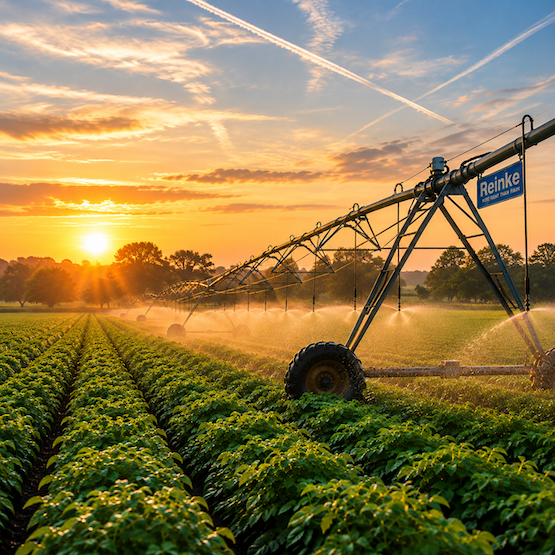
Daytime pumping loads on arable and horticultural units through the growing season.
Milking and milk cooling run daily, giving a consistent year-round daytime load.
Shed ventilation, heating and packhouse refrigeration often run continuously.
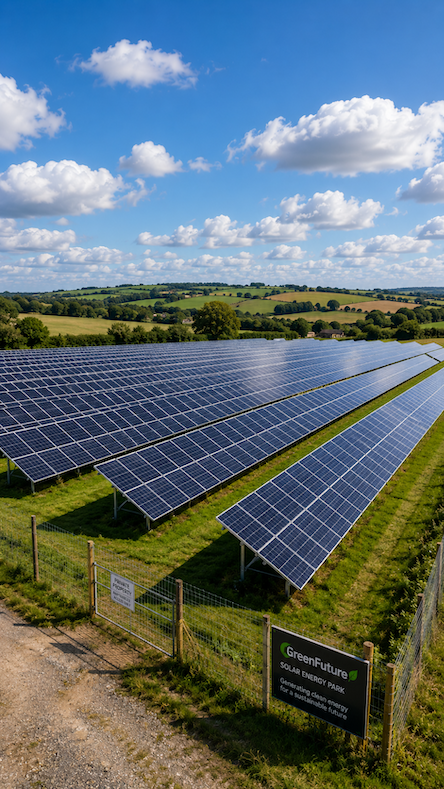
A barn roof that has comfortably carried decades of agricultural use is not automatically ready for a solar array without checking. Roof structure and loading capacity, cladding age and condition, and the type of roof covering all need assessing by the installer before a system is designed, since older agricultural buildings can include asbestos-containing cladding or roofing sheets that need identifying and managing before any work takes place. None of this is unique to farms, but it tends to matter more here than on a modern warehouse roof, simply because farm buildings are older on average and were not built with solar in mind.
From a finance perspective, this matters because a lender's view of the asset and its likely working life can be affected by the condition of the roof it sits on, not just the panels themselves. Getting a proper structural and condition survey done early, before finance is arranged, avoids the awkward situation of a system being specified before anyone has confirmed the roof can actually take it.
A larger share of UK farm businesses trade as sole traders or partnerships than in most other sectors this site covers, which makes the regulatory threshold a genuinely relevant question rather than a footnote. Under UK law, business finance agreements for sole traders and small partnerships are exempt from consumer credit regulation where the agreement is for business purposes and the amount of credit exceeds £25,000. Most farm solar installations, even relatively modest barn roof systems, comfortably clear this threshold, so this is rarely the deciding factor in practice, but it is worth understanding before an application goes in rather than after.
Tax treatment differs by business structure too. A farming limited company pays corporation tax and can claim the Annual Investment Allowance against corporation tax due. A sole trader or partnership is taxed through income tax instead, and the same AIA principle applies against income tax due on the individual partners' or proprietor's profits, at their own marginal rate rather than a flat corporate rate. Given how variable farm profits can be year to year, when a system goes live, and therefore which tax year the AIA claim falls into, can meaningfully affect how much of the relief is actually useful in practice. This is worth planning with your accountant rather than leaving to the installation timetable.
A meaningful proportion of UK farmland is farmed under a tenancy rather than owned outright, and that changes the practical steps needed before solar finance can proceed. Where the farm buildings are tenanted, written landlord consent confirming the installation can go ahead is typically needed before finance, and before any grant application, can be progressed. This protects both parties: the landlord retains control over permanent alterations to their building, and the tenant has clear written confirmation before committing to a finance agreement secured against an asset fixed to land they do not own.
This is a conversation worth having with the landlord early, alongside the roof survey, rather than after a quote has been agreed. It rarely blocks a deal outright, but it is a genuine extra step that owner-occupied commercial roofs elsewhere on this site do not need to think about.
Grant schemes for farm solar exist in all four UK nations and are genuinely worth investigating, but the terms change frequently enough that we are not going to state specific percentages or caps here that could be out of date by the time you read this. In England, the Farming Equipment and Technology Fund is a real, established Defra capital grant scheme, run in annual competitive windows against a published list of eligible items; other Defra and Rural Payments Agency schemes for farm productivity and renewable energy also exist and are updated for each funding round. Wales, Scotland and Northern Ireland each run separate devolved schemes.
Check current terms directly. A number of commercial sites quote specific farm solar grant percentages and caps that we could not independently verify against gov.uk at the time of writing. Rather than repeat a figure we cannot stand behind, we would rather point you to the current guidance on gov.uk and the Rural Payments Agency, or your farming advisor, before you plan a project around a specific grant amount.
Whatever grant support may or may not be available, it typically covers only part of the project cost, and application windows are competitive and time-limited. Structuring finance for the balance, or for the full project if a grant window has closed or the farm does not qualify, is where Avro comes in, and it does not need to wait on a grant decision.
Spreads the cost over an agreed term with fixed repayments, while the business is treated as owning the asset for tax purposes from the outset, preserving AIA eligibility in the same way as a cash purchase.
Full cost paid upfront. Straightforward where the business has the working capital available and wants to avoid finance charges entirely, with the same AIA treatment as hire purchase.
Considering a lease or PPA instead? These depend on contract-specific pricing and terms that we do not model with a generic formula. See the six-route comparison on our main guide for how they compare to hire purchase and cash purchase.
Composite illustration, not a real client. Same methodology as our main calculator: 850 kWh generated per installed kWp in Year 1, running costs and insurance at £12/kWp/year, hire purchase at an illustrative 8.5% nominal annual rate paid in advance over 120 months, VAT fully recoverable.
Run your own roof size, load profile and business type through the full calculator.
Avro arranges farm solar finance for limited companies, LLPs, sole trader farmers and farming partnerships, for business use only. Most farm solar deals comfortably exceed the £25,000 threshold UK law (FSMA, article 60C) sets for a business finance agreement to qualify as exempt from consumer credit regulation, so this applies whether the business trades as a limited company, a sole trader or a partnership.
Avro Asset Finance is a trading name of Avro Fleet Ltd. We do not provide consumer credit or regulated financial products; we arrange unregulated business finance agreements only, and this does not carry the same protections as a regulated consumer credit agreement. We are a broker, not a lender, and we receive commission from funders on completed deals, which varies by funder.
Nothing on this page is a quote, an offer, tax advice or grant advice. Figures are illustrative, subject to survey, funder credit approval and site-specific factors. Confirm current grant scheme terms directly with gov.uk or the Rural Payments Agency, and confirm AIA and tax treatment with your accountant before proceeding.
Yes. Avro arranges hire purchase and cash purchase funding for solar PV on farm buildings, for sole trader farmers, farming partnerships and agricultural limited companies.
Grant schemes exist and change yearly, including the Farming Equipment and Technology Fund in England and devolved equivalents elsewhere. Check current terms on gov.uk or with the Rural Payments Agency; grants do not replace the need for finance on the remaining cost.
Potentially, yes, with written landlord consent confirming the installation can proceed, typically needed before finance or a grant application can go ahead.
Yes. Roof structure, loading capacity, age, cladding condition and any asbestos-containing materials should be assessed by the installer before a system is designed.
Yes, provided the agreement is for business purposes and exceeds £25,000, which most farm solar installations comfortably do.
Loads running mostly during daylight hours: grain drying, irrigation pumping, dairy parlour operation and milk cooling, poultry shed ventilation, and cold storage or packhouse refrigeration.
In many cases, yes, subject to roof condition, orientation and structural capacity. These are common locations for farm solar installations.
All six funding routes compared, with the AIA argument covered in full.
Run your own roof size, load profile and business type.
For farms also running haulage, grain transport or livestock vehicles.